dotlah! dotlah!
  • Cities
  • Technology
  • Business
  • Politics
  • Society
  • Science
  • About
Social Links
  • zedreviews.com
  • citi.io
  • aster.cloud
  • liwaiwai.com
  • guzz.co.uk
  • atinatin.com
0 Likes
0 Followers
0 Subscribers
dotlah!
  • Cities
  • Technology
  • Business
  • Politics
  • Society
  • Science
  • About
  • Cities

Biophilia In The City

  • December 2, 2019
Total
0
Shares
0
0
0

E.O. Wilson, who did a lot to disseminate biophilia in the USA in the middle of the twentieth century, described biophilia as “the innately emotional affiliation of human beings to other living organisms. Innate means hereditary and hence part of ultimate human nature.”

For the first time in history, more people are living in cities and urban environments, away from the natural systems that sustain us. While there are many benefits of living closely and communing with others, we are fast being separated from the ecology of which we are part, and whose presence is essential for our physical and psychological well-being.

We need to reconnect with our environment so that we can learn from it, be soothed, healed and inspired by it, and love it enough so we do all we can to protect it. Underlying this is the increasingly better-understood idea of our indigenous ancestors that we are indeed part of nature and that it is indeed part of us.

Biophilic cities are cities of abundant nature in close proximity to large numbers of urbanites. Biophilic cities value residents’ innate connection and access to nature through abundant opportunities to be outside and to enjoy the multisensory aspects of nature by protecting and promoting nature within the city.

The Biophilic Cities organisation notes that “Biophilic cities are cities of abundant nature in close proximity to large numbers of urbanites. Biophilic cities value residents’ innate connection and access to nature through abundant opportunities to be outside and to enjoy the multisensory aspects of nature by protecting and promoting nature within the city.”

Timothy Beatley summarises the qualities and attributes of biophilic cities in his “Handbook of Biophilic City Planning & Design” as follows.

Biophilic cities:

This sounds not only like the sort of place that many of us would love to live in, but the sort of place that might prove to be much more resilient as the climate changes in the future.

So how do we achieve this? Is it even possible in the cities we have already created?

We must refocus our attention to ensure that all projects and developments in our existing and new cities support this aim. They need to ensure that nature is inherent everywhere—not just something to visit. Nature needs to be placed at the heart of all decision making, the success of which should be judged by how well the processes restore the natural environment and the ability of all species to connect with it.

There are many ways that we can creatively incorporate initiatives for engaging with nature using all our senses in many places. Ideas that have been implemented around the world include:

Sydney, Australia

One Central Park—the tallest green wall in the world on the side of a residential tower.

One Central Park Sydney. Photo Credit: Rob Deutscher

Singapore

Khoo Teck Puat—a hospital that uses nature in the healing process by weaving rainforest (flora and fauna) throughout the building.

Khoo Teck Puat Hospital, Singapore. Photo Credit: Khoo Teck Puat Hospital

Seoul, South Korea

Cheonggyecheon Stream Restoration project—knocking down a highway and re-earthing the river in the heart of the city.

Conceptual site plan presented in 2002 by the Research Center Director of the Seoul Development Institute, Seoul Metropolitan Government. Photo Credit: Platforma Urbana

Chengdu, China

Ecological belt and garden city vision—a system of wetlands and water that encircles its centre.

http://www.china.org.cn/travel/Wild_Sichuan/node_7207974.htm

Austin, Texas USA

Green Alley Program—reimagining the spaces behind homes as locations of nature.

Students captured the greening possibilities of an alleyscape transformed. Credits: 2009 University of Texas Architectural Studio. Photo Credit: Biophiliccities

New York, New York, USA

High Line—the conversion of an unused above-ground railway line into a thriving parkland for the city and its people to enjoy.

Credit: http://www.thehighline.org/

When should we do this? Yesterday. And as that is not possible, today. The longest journey starts with the first step, which we can take right now. Join the growing numbers of people who understand the abundance and richness that can be achieved for all through biophilic design. Together we can lobby our city representatives to help develop appropriate policies and plans to enable our cities to become members of the Biophilic Cities network and extend the experience and benefits across the world.


Caroline Pidcock

This article originally appeared in Impakter.

Total
0
Shares
Share
Tweet
Share
Share
Related Topics
  • Biophilia
  • Biophilic Cities
  • Environment
  • Garden City
  • Nature
majulah

Previous Article
  • Cities
  • Lah!

SNDGO And NTUC Sign MOU To Enhance Workers’ Digital Skills And Spur Co-Creation Of Smart Nation Initiatives

  • December 2, 2019
View Post
Next Article
  • Cities

How The Road Network Determines Traffic Capacity

  • December 3, 2019
View Post
You May Also Like
View Post
  • Cities
  • People

We must empower local leaders to meet global goals – here’s why

  • dotlah.com
  • November 4, 2025
View Post
  • Cities

Politicians love comparing NZ’s economy to Singapore or Ireland – but it’s simplistic and misleading

  • dotlah.com
  • September 21, 2025
View Post
  • Cities
  • Technology

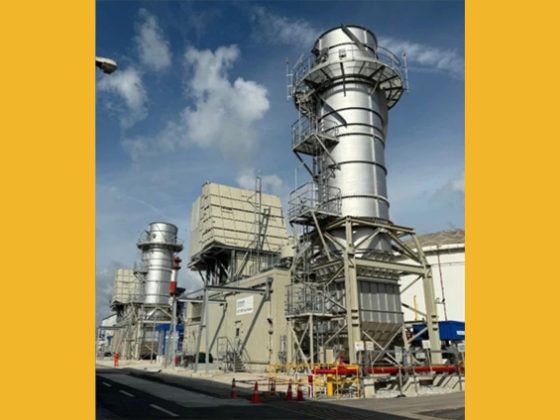
Meralco PowerGen’s PacificLight starts up 100 MW fast-response plant in Singapore

  • dotlah.com
  • June 20, 2025
View Post
  • Cities

Renewable energy, carbon credits are priority areas of cooperation for Singapore, Philippines: Lawrence Wong

  • dotlah.com
  • June 4, 2025
View Post
  • Cities
  • Politics

Singapore businesses eye more investments in PH, says PM Wong

  • Dean Marc
  • June 4, 2025
View Post
  • Cities
  • Research

Mathematicians uncover the logic behind how people walk in crowds

  • dotlah.com
  • April 3, 2025
“Toyota Woven City,” a Test Course for Mobility, Completes Phase 1 Construction and Prepares for Launch
View Post
  • Cities
  • Technology

“Toyota Woven City,” a Test Course for Mobility, Completes Phase 1 Construction and Prepares for Launch

  • John Francis
  • January 6, 2025
View Post
  • Cities

Popes were once confined to Rome. Now they travel the world – and Francis’ current journey is particularly significant

  • dotlah.com
  • September 13, 2024


Trending
  • 1
    • Lah!
    Tariffs, Trump, and Other Things That Start With T – They’re Not The Problem, It’s How We Use Them
    • March 25, 2025
  • smart-fortwo-ev-share-now-S6q25Py7fyE-unsplash 2
    • Cities
    • Gears
    Top 8 Compact Electric Vehicles for City Driving
    • April 17, 2023
  • 3
    • Cities
    • Technology
    ABB’s Technology In Singapore’s First Dual-Mode Desalination Plant Helps Tackle Water Scarcity In Region
    • September 24, 2021
  • 4
    • Technology
    Enhancing Digital Privacy By Hiding Images From AI
    • July 2, 2020
  • surveillance-cameras-michal-jakubowski-oQD9uq4Rd4I-unsplash 5
    • Cities
    • Technology
    6 Innovative Technologies That Enhance Public Safety Like Never Before
    • November 1, 2021
  • 6
    • Technology
    A Clue To Stopping Coronavirus: Knowing How Viruses Adapt From Animals To Humans
    • February 5, 2020
  • 7
    • Lah!
    VR Study Finds Vertical Greenery Useful As Stress Buffer
    • July 7, 2021
  • cpu-computer-chip-pexels-athena-2582937 8
    • People
    • Technology
    How Technology Is Enhancing the Lives of People with Disabilities
    • December 17, 2021
  • Wind power 9
    • Cities
    • Climate Change
    Renewables Now Generate More Of Britain’s Electricity Than Fossil Fuels – But What Happens Next?
    • January 14, 2024
  • 10
    • Lah!
    Latest Data Shows Progress Made By Each Generation of Singaporeans: Improvements In Education, Employment, Wages, Residential Property Ownership
    • October 23, 2019
  • 11
    • Science
    You Thought Quantum Mechanics Was Weird: Check Out Entangled Time
    • July 25, 2019
  • damir-spanic-09znJJdtZFc-unsplash 12
    • Cities
    • People
    Sleep And The City: How To Improve Your Sleep When Living In A City
    • September 7, 2021
Trending
  • 6 Bags You Might Be Missing for Your Next Trip 1
    Zed Approves | 6 Bags You Might Be Missing for Your Next Trip
    • December 2, 2025
  • Zed Approves | 48 Highly Rated Black Friday Deals in 2025 2
    Zed Approves | 48 Highly Rated Black Friday Deals in 2025
    • November 28, 2025
  • Points, Lines and a Question 3
    What Is The Point In Making Points?
    • November 27, 2025
  • 4
    This year’s climate talks saw real progress – just not on fossil fuels
    • November 24, 2025
  • Early Black Friday Deals - Hero image 5
    Zed Approves | More Early Black Friday 2025 Deals You Can’t Miss
    • November 22, 2025
  • 6
    How AI can accelerate the energy transition, rather than compete with it
    • November 19, 2025
  • 7
    Five key issues at the UN climate summit in Brazil – and why they matter to you and the planet
    • November 15, 2025
  • 8
    ASEAN takes major step toward landmark digital economy pact
    • November 8, 2025
  • 9
    We must empower local leaders to meet global goals – here’s why
    • November 4, 2025
  • Halloween Deals 10
    31 Spooky Deals for October 31! Halloween Specials!
    • October 31, 2025
Social Links
dotlah! dotlah!
  • Cities
  • Technology
  • Business
  • Politics
  • Society
  • Science
  • About
Connecting Dots Across Asia's Tech and Urban Landscape

Input your search keywords and press Enter.