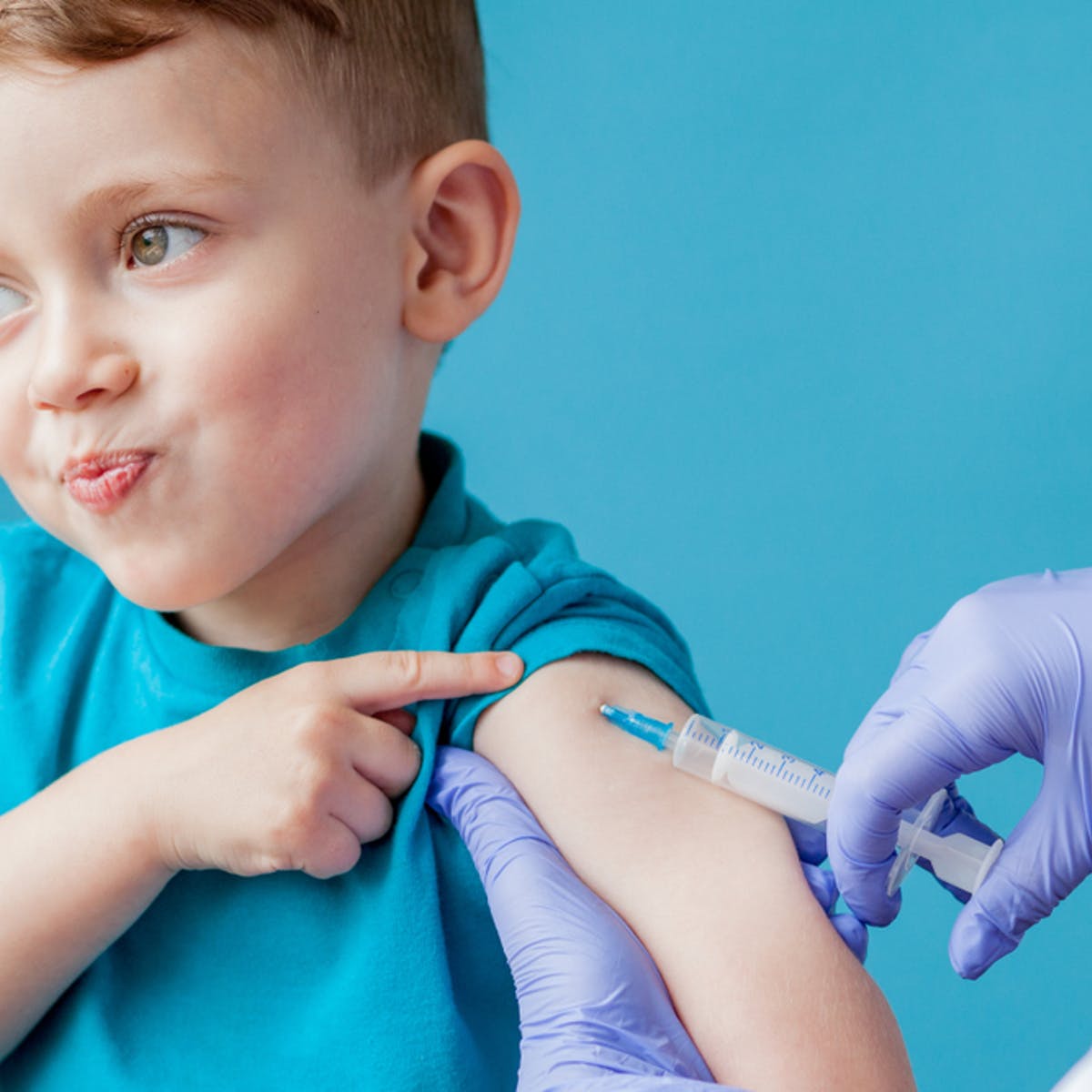
The first COVID-19 vaccine has been authorized for use in the U.S., and states have been drawing up plans for who should get vaccinated first.
FatCamera via Getty Images
But one important group is absent: children.
So far, the vaccine is allowed only for adults and older teens. Testing is only now getting started with children – and just with adolescents. There are still a lot of unknowns.
As an infectious disease pharmacist and professor who helps manage patients hospitalized with COVID-19, I frequently hear questions about vaccines. Here’s what we know and don’t know in response to some common questions about vaccinating kids for COVID-19.
When can my child be vaccinated?
Right now, it appears unlikely that a vaccine will be ready for children before the start of the next school year in August.
Adult trials of the two leading vaccines have had promising results. On Dec. 11, the U.S. Food and Drug Administration issued an emergency use authorization for Pfizer’s vaccine for people ages 16 and older, and a second vaccine, from Moderna, is expected to be cleared for adult use soon. Vaccinations are already underway in the U.K., and Canada has also authorized the vaccine’s use for the same age range.
But clinical trials involving children are only just getting started.
Pfizer, working with Germany’s BioNTech, expanded its COVID-19 vaccine testing to children ages 12 and older only in October. Moderna announced on Dec. 2 that it planned to begin COVID-19 vaccine trials in children ages 12-17 soon.
The vaccine’s efficacy and safety will have to be evaluated for each age group, and testing hasn’t started for infants, toddlers or kids in the U.S.
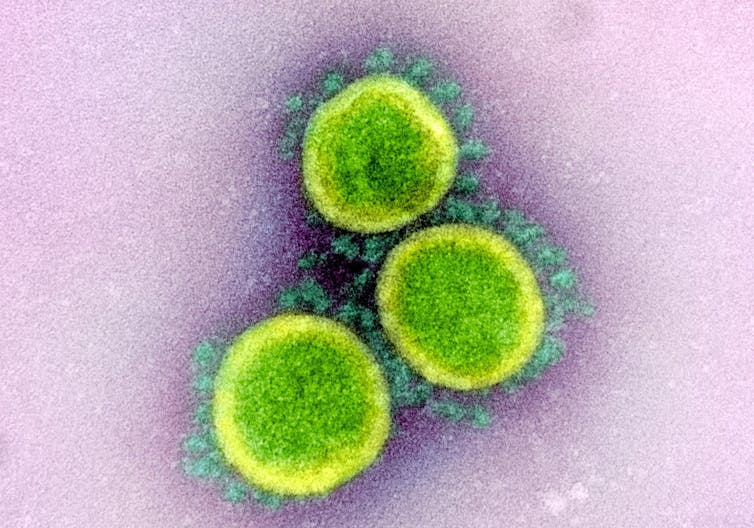
NIAID, CC BY
Clinical trials are designed to ensure that the vaccine is safe and effective. Typically, it takes 10 to 15 years from the start of development until the vaccine is licensed, but the COVID-19 vaccines are being developed faster in response to the pandemic.
Will children need more shots than adults?
It does not appear that the schedule of COVID-19 vaccine doses will be different for children, but that could change as testing goes on.
Pfizer’s vaccine is being tested in adolescents with a two-dose series, three weeks apart, just like in adults. Moderna also plans to use its adult schedule – two doses four weeks apart – in an upcoming trial with 3,000 adolescents.
The second dose serves as a “booster shot,” since the first dose alone doesn’t provide optimal immunity. This is consistent with several other vaccines, including hepatitis B, measles, mumps and rubella.
Right now, only those two doses are planned, but that could change. It’s unclear how long the immune response from these COVID-19 vaccines will last or if more doses will be necessary in the future. The flu vaccine, for example, requires a new dose every year because the virus changes. Recent promising data from Moderna indicate immunity is sustained for at least three months after receiving the COVID-19 vaccine.
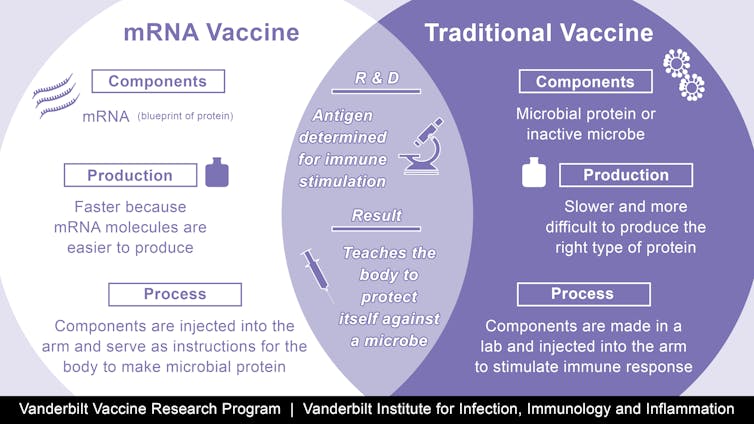
@VI4research, CC BY-NC-SA
Are the vaccines safe for kids?
So far, no serious safety concerns have been identified with either the Pfizer or Moderna vaccines, but the trials are still in the early stages for children. Several other vaccines are also under development around the world, and a few drugmakers have started trials with younger children in other countries.
Another concern has been temporary side effects.
Children tend to have stronger immune systems than adults, and they may have stronger temporary reactions to the vaccine. That could mean more pain and swelling at the injection site for a few days and possibly a fever.
These side effects are common with vaccines. They are evidence that the immune system is doing what it should be doing, but they can be scary.
In the U.K, health officials warned on Dec. 9 that anyone with a history of anaphylaxis shouldn’t get the vaccine after two adults, both with past experience with anaphylaxis, had severe reactions.
Both the safety of the vaccine and the likelihood of temporary side effects are important to understand, because adults and children will need both doses for the vaccine to provide optimal immunity.
Is vaccinating adults enough?
Just vaccinating adults would not be enough to end the pandemic. Children can still become infected, transmit the virus and develop complications. If a vaccine is not available, children will likely serve as a reservoir of the virus, making it harder to end the pandemic.
Both leading vaccines have reported promising results in adults so far: The efficacy rate is approximately 94% for Moderna’s vaccine and 95% for Pfizer’s. That means that under the best conditions, about 95% percent of adults who get the vaccine have been found to be protected. That’s higher than expected.
[Get the best of The Conversation, every weekend. Sign up for our weekly newsletter.]Whether the same holds for children remains to be seen.
Children typically have milder COVID-19 symptoms than adults, but they can still transmit the virus to others.
Receiving the vaccine also carries other benefits, including allowing a safer return to schools and activities.
Do we have to keep wearing masks and social distancing?
In the meantime, it will be important to continue standard preventive measures, including social distancing, wearing face masks, washing hands and following other official guidance.
While the hope is that a vaccine will allow people to get back to a more “normal” way of living, these preventive measures will still be needed, even after receiving the vaccine, until more information is known about the extent of protection from the vaccine.
There are still many unanswered questions. As time goes on, we’ll have more answers.
This article was updated with the FDA issuing the emergency use authorization on Dec. 11.
Wesley Kufel, Clinical Assistant Professor, Pharmacy Practice, Binghamton University, State University of New York
This article is republished from The Conversation under a Creative Commons license. Read the original article.