With a new infectious disease outbreak on our doorstep, we might ask ourselves: are we reacting to the coronavirus in a way that is proportional to the threat?
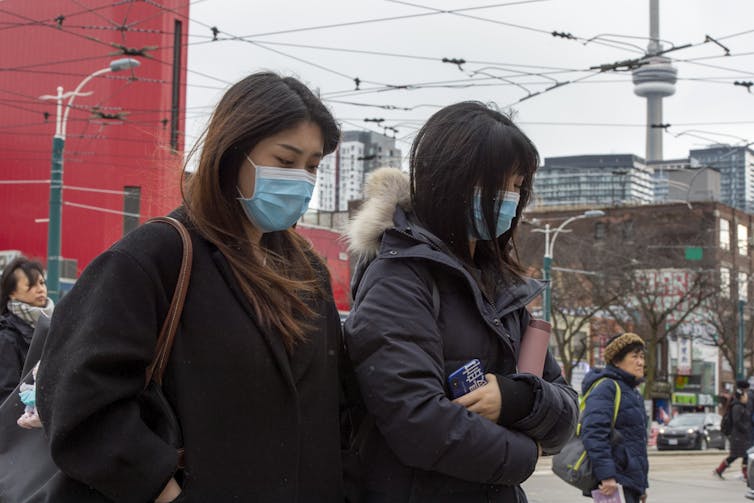
The problem is that when it comes to infectious disease epidemics, we have a strong tendency to overreact emotionally and underreact behaviourally. The overreaction aspect may be attributable to the fact that we are primed to fear infectious diseases appearing suddenly within our population, in the same way that we are evolutionarily prepared to fear snakes and spiders.
Most of us fear snakes and spiders without ever having been harmed by them. Compare that with automobiles, which harm many more of us, yet are only feared by a small number who have been in accidents themselves. In the same way, we fear infectious disease outbreaks much more readily and intensely than we fear diabetes epidemics.
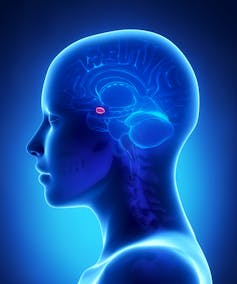
From the perspective of the brain, the amygdala is largely responsible for fear learning, a process by which fear responses become attached to formerly neutral cues that are now viewed as signifying something genuinely threatening.
This explains fearful emotional responses to a formerly innocuous sneezing sound in a crowded subway train. Such amygdala-driven learning more readily occurs when the threat in question is an infectious disease than, say, a chronic disease epidemic of a much larger scale that poses an authentic personal threat.
Déjà vu
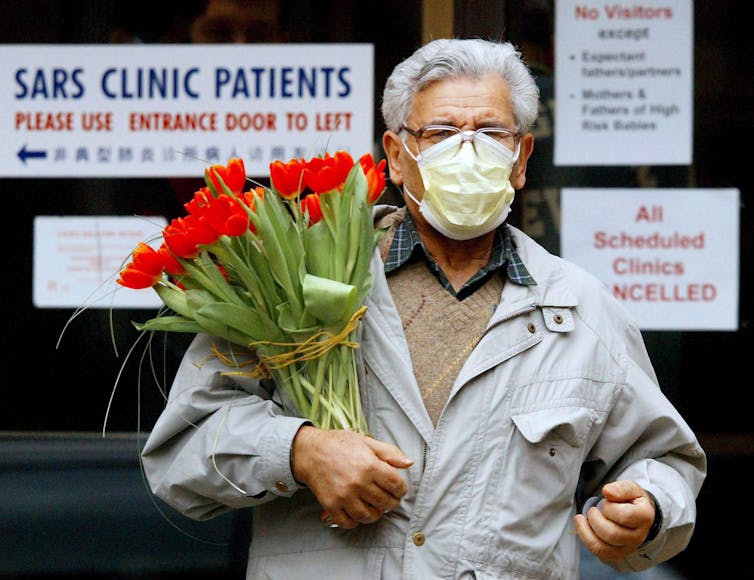
In 2003, SARS infected more than 8,000 people worldwide and caused 774 deaths. In Canada, 438 people were infected and 44 died. Those figures yield about a 10 per cent death rate for SARS. To be sure, it was a lethal virus, and it spread at an alarming rate with tragic consequences, particularly in places where infection protocols were not enacted quickly and decisively.
Now, 17 years later, we are facing a very similar-looking threat from another coronavirus, again originating in China, and quickly spreading around the globe. The mortality rate is difficult to estimate so early, but signs so far suggest a mortality rate similar to or lower than SARS.
In just over a week, mass travel restrictions are been enacted overseas, and governments (appropriately) are advising against travelling to the epicentre of the outbreak, the city of Wuhan, China.
Highly alarming stories and images are circulating on social media depicting an epidemic out of control, about to overtake North America. Netflix even just launched a (very) hastily prepared docu-series on the horrors of infectious disease epidemics (just like coronavirus). If that isn’t a sign of the coming apocalypse, I’m not sure what is.
Viral information
The world seems riveted to media content pertaining to the coronavirus outbreak. From many perspectives, this is not surprising.
We respond quickly and intensely to information about infectious disease threats, even in faraway places or if they’re unlikely to have an impact on us. A reader’s attention is captured by the topic even when the coverage itself is intentionally not sensationalistic. I would read a responsibly written Ebola article over an excitingly written heart disease article any day.
In this age of social media, sharing is an individual choice and one made almost reflexively. In our brains, this relatively unconscious level of processing is disproportionately in the domain of the amygdala and largely unimpeded by higher cortical centres known to be implicated in thoughtful deliberation.

The tendency to share emotionally evocative images and text is even more unchecked than in conventional media. This results in selective spread of highly sensationalistic content via social media, and motivation for media outlets to shape their offerings to be more sensational. An old dynamic on steroids.
There is also a trend evident in some media outlets to intentionally counter this. All of us, when we catch ourselves, can recognize and limit our indulgence of overly sensationalistic content and reactions, including when it comes to infectious disease outbreaks.
Word to the wise
What should we do while we wait for things to unfold? My advice, if I were a physician dispensing it, would be to encourage people to pay attention to official information as much as possible, the Public Health Agency of Canada, for example, or its provincial counterparts. It will be there, and will be up to date and accurate for the most part.
The behavioural advice is relatively straightforward: wash your hands often, cover your mouth (with your arm) when you cough, avoid touching your face (surprisingly difficult to do consistently) and, for now, avoid travelling to Wuhan.
The situation is more complicated in mainland China, where the state-controlled media is struggling to compete with social media sharing, in part because of lack of trust. One advantage that the Chinese government does enjoy, however, is the ability to quickly and decisively implement top-down actions to limit disease spread.
So really, there are very different challenges for capitalist and communist countries when attempting to stem the flow of infectious disease epidemics.
Food for thought
Long story short, don’t lose sight of the larger picture in terms of risks in everyday life.
Spending too much time watching television while snacking on potato chips is probably riskier than shaking hands. But maybe avoid both for now, just to be safe.
And to end where I began — recalling how SARS overtook our collective consciousness in 2003 — it’s important to also remember that five times more deaths are attributable to the seasonal flu every year. If there is an infection we should fear, could it be that one? Or should we stop fearing infections altogether?
Peter Hall, Professor, School of Public Health and Health Systems, University of Waterloo
This article is republished from The Conversation under a Creative Commons license. Read the original article.