dotlah! dotlah!
  • Cities
  • Technology
  • Business
  • Politics
  • Society
  • Science
  • About
Social Links
  • zedreviews.com
  • citi.io
  • aster.cloud
  • liwaiwai.com
  • guzz.co.uk
  • atinatin.com
0 Likes
0 Followers
0 Subscribers
dotlah!
  • Cities
  • Technology
  • Business
  • Politics
  • Society
  • Science
  • About
  • People
  • World Events

How many people need to get a COVID-19 vaccine in order to stop the coronavirus?

  • January 17, 2021
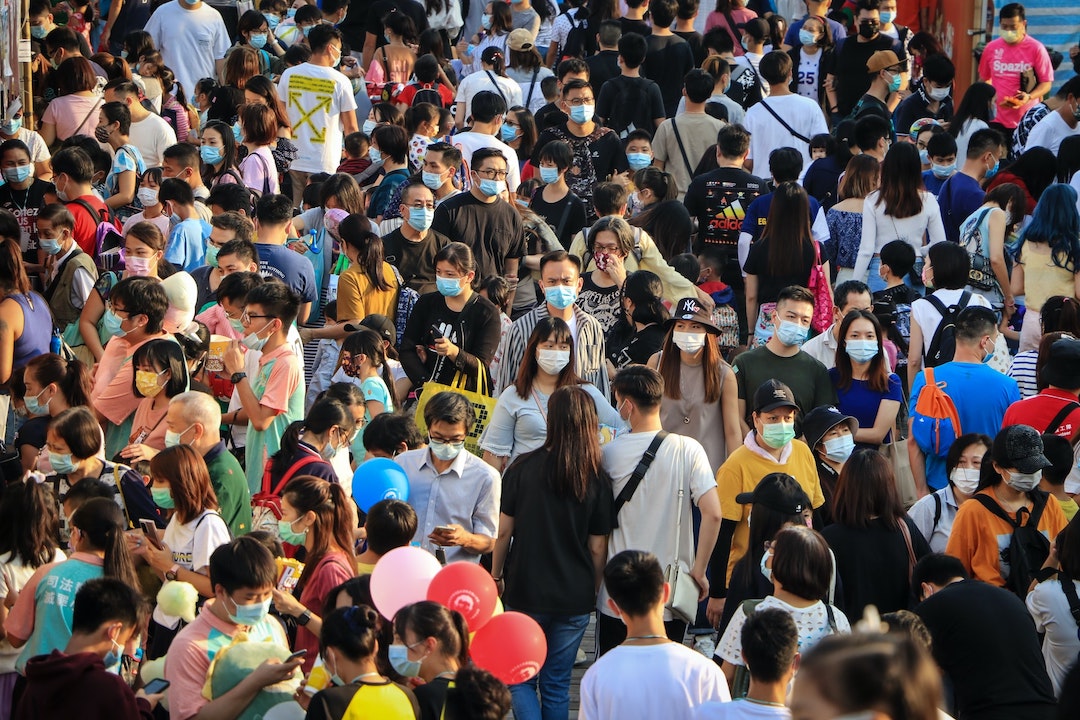
pandemic-crowd-macau-photo-agency-4yXV0JIK-yo-unsplash
Total
0
Shares
0
0
0

It has been clear for a while that, at least in the U.S., the only way out of the coronavirus pandemic will be through vaccination. The rapid deployment of coronavirus vaccines is underway, but how many people need to be vaccinated in order to control this pandemic?

I am a computational biologist who uses data and computer models to answer biological question at the University of Connecticut. I have been tracking my state’s COVID-19 epidemic with a computer model to help forecast the number of hospitalizations at the University of Connecticut’s John Dempsey Hospital.
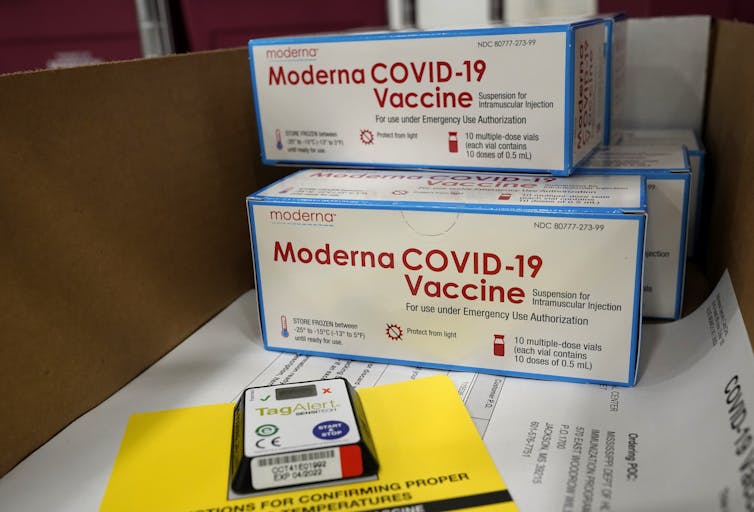
Before the U.S. can return to some form of normal, a lot of people need to be vaccinated.
AP Photo/Paul Sancya, Pool

This type of computer model and the underlying theory can also be used to calculate the vaccination rates needed to break the chain of transmission of the coronavirus. My estimate is that for the entire U.S., roughly 70% of the population needs to be vaccinated to stop the pandemic. But variation in how people behave in different parts of the country, as well as open questions on whether the vaccine prevents infection entirely or just prevents people from getting sick, add a degree of uncertainty.
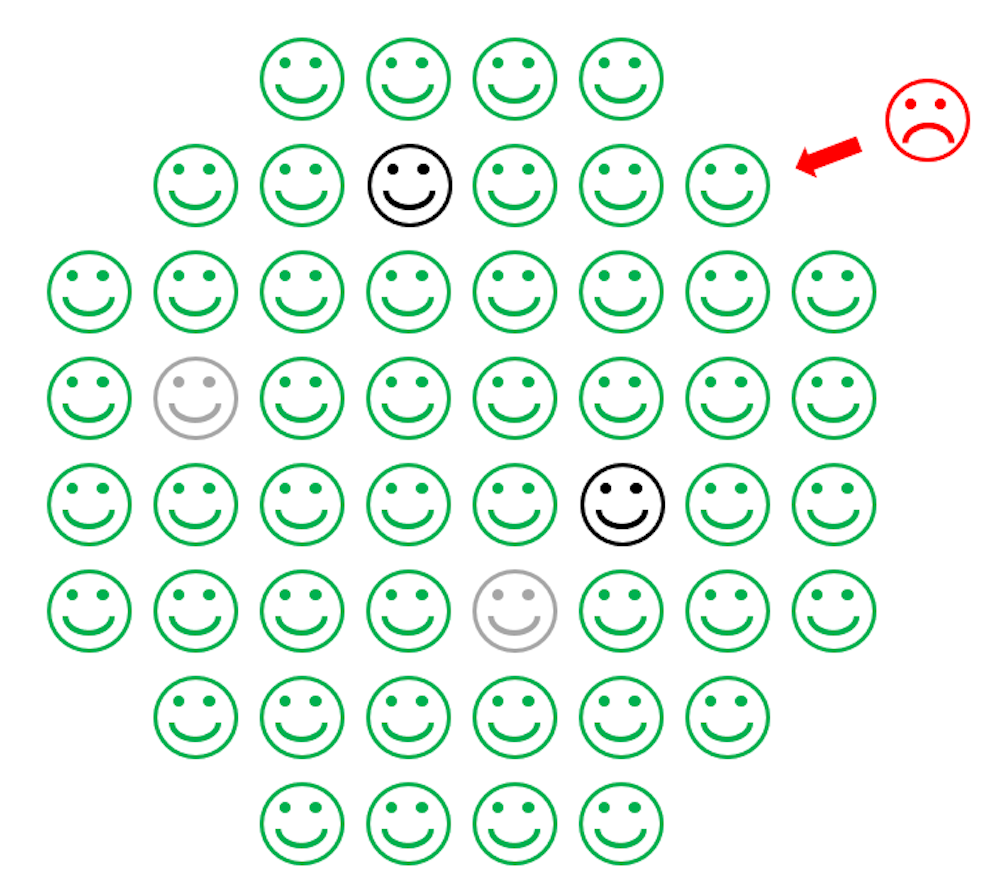
A drawing showing a circle of green happy faces with some blue happy faces in the middle and a red frowning face unable to reach the blue faces.
When enough people are vaccinated, the coronavirus will not be able to spread from person to person.
Cavernia via Wikimedia Commons, CC BY-SA

Cutting off transmission

Clinical trials have shown that once a person gets vaccinated for the coronavirus, they won’t get sick with COVID-19. A person who doesn’t get sick can still be infected with the coronavirus. But let’s also assume that a vaccinated person can’t spread the virus to others, though researchers still don’t know if this is true.

When enough of the population is vaccinated, the virus has a hard time finding new people to infect, and the epidemic starts dying out. And not everyone needs to be vaccinated, just enough people to stop the virus from spreading out of control. The number of people who need to be vaccinated is known as the critical vaccination level. Once a population reaches that number, you get herd immunity. Herd immunity is when there are so many vaccinated people that an infected person can hardly find anyone who could get infected, and so the virus cannot propagate to other people.
This is very important to protect people who cannot get vaccinated.

The critical vaccination level depends on how infectious the disease is and how effective the vaccine is. Infectiousness is measured using the basic reproduction number – R0 – which is how many people an infected person would spread the virus to on average if no protective measures were in place.

The more infectious a disease is, the larger the number of people who need to be vaccinated to reach heard immunity. The higher the effectiveness of the vaccine, the fewer people need to be vaccinated.

A barn in a field with a city in the background.
Different social behavior in different places leads to varying R0 values.
Ed Freeman/Stone via Getty Images

Not the same everywhere

R0 values differ from place to place because their populations behave differently – social interactions are not the same in rural and urban locations, nor in warm climates compared to cold ones, for example.

Using the data on positive cases, hospitalizations and deaths, my model estimates that Connecticut currently has an R0 of 2.88, meaning that, on average, every infected person would pass the virus on to 2.88 other people if no mitigation measures were in place. Estimates at the county level range from 1.44 in rural Alpine, California to 4.31 in urban Hudson, New Jersey.

But finding an R0 value for the entire U.S. is especially tricky because of the diversity of climates and because the virus has affected different areas at different times – behavior has been far from uniform. Estimates vary from 2.47 to 8.2, though most researchers place R0 for the entire U.S. around 3.

While R0 varies by location and between estimates, the effectiveness of the vaccines is constant and well known. The Pfizer-BioNTech and Moderna vaccines are 95% and 94.5% effective at preventing COVID-19, respectively.

Using values for vaccine effectiveness and the R0, we can calculate the critical vaccination level. For Connecticut, with an R0 of 2.88, 69% of the population needs to be vaccinated. For the entire U.S., with R0 of 3, this would be 70%. In New York City, with an estimated R0 of 4.26 this would be 80%.

A lot of uncertainty

While the math is relatively simple, things get complicated when you consider important questions for which epidemiologists still have no answers.
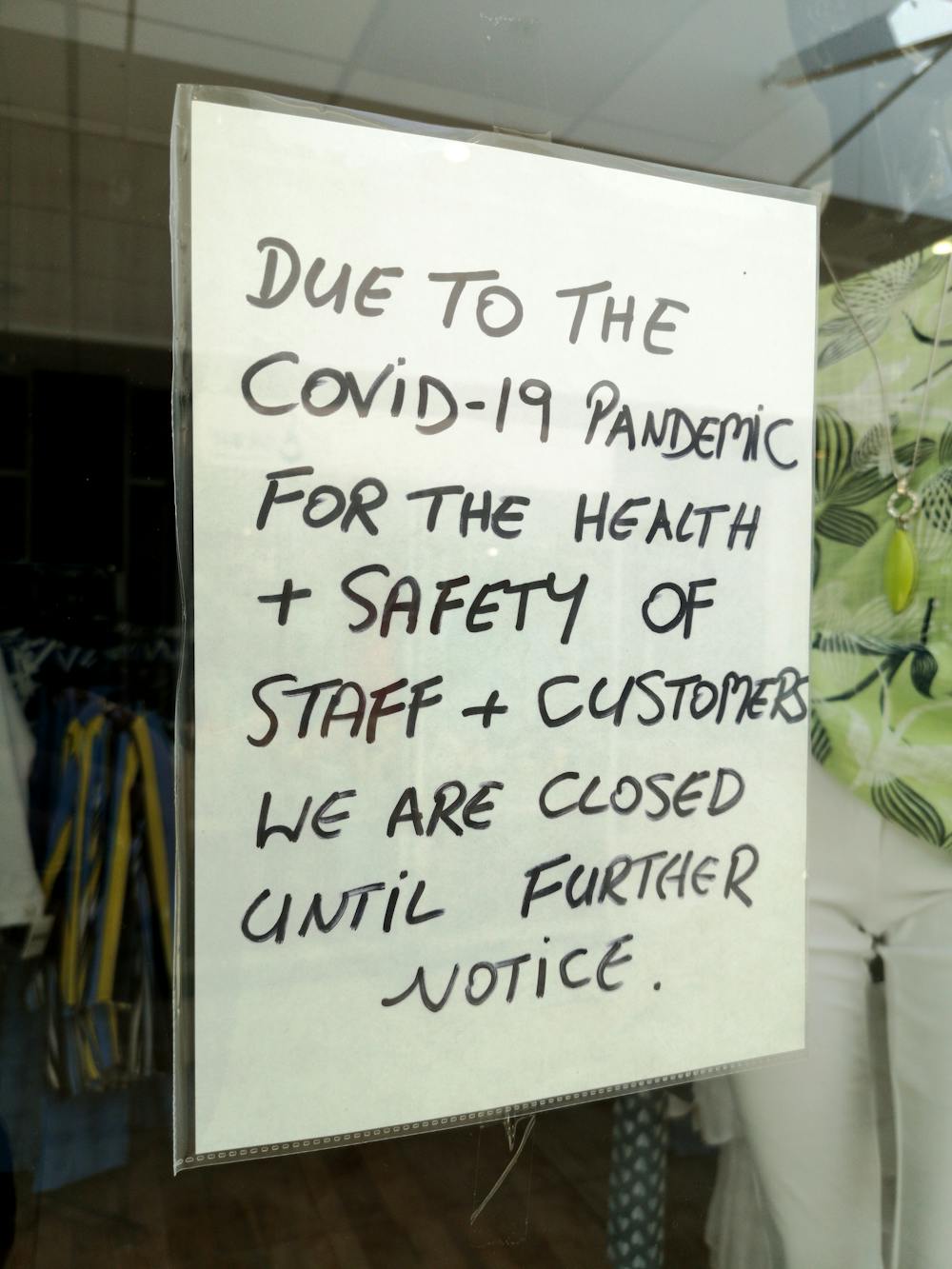
A sign in a shop window saying the shop is closed until further notice due to COVID-19
Vaccines offer the best path forward, but a few unknowns could change how many people need to be vaccinated.
Annie Japaud/Moment via Getty Images

First, the formula for critical vaccination level assumes that people interact randomly. But in the real world, people interact in highly structured networks depending on work, travel and social connections. When those contact patterns are considered, some researchers found critical vaccination levels to be considerably smaller compared to assuming random interactions.

Unfortunately, other unknowns could have an opposite effect.

Vaccine trials clearly show that vaccinated people don’t get sick with COVID-19. But it is still unknown whether the vaccines prevent people from getting mild infections that they could pass on to others. If vaccinated people can still be infected and pass on the virus, then vaccination will not provide herd immunity – though it would still prevent serious disease and reduce mortality drastically.

A final question that remains to be answered is how long immunity to the coronavirus lasts after a person is vaccinated. If immunity wanes after a few months, then each individual will need repeated vaccinations.

It is hard to say with certainty how many people need to be vaccinated in order to end this pandemic. But even so, the arrival of COVID-19 vaccines has been the best news in 2020. In 2021, as a large proportion of individuals in the U.S. get the vaccine, the country will be heading toward the critical vaccination level – whatever it may be – so that life can start to return to normal.

The Conversation

Pedro Mendes, Professor of Cell Biology, University of Connecticut

This article is republished from The Conversation under a Creative Commons license. Read the original article.

Total
0
Shares
Share
Tweet
Share
Share
Related Topics
  • AstraZeneca
  • Coronavirus
  • COVID-19
  • COVID-19 Vaccine
  • Herd Immunity
  • Moderna
  • Pfizer
  • Viruses
majulah

Previous Article
  • Cities
  • Lah!

Grab And Panasonic Launch Integrated Campaign To Promote Better Indoor Air Quality In Southeast Asia

  • January 15, 2021
View Post
Next Article
cycling bike
  • Cities
  • People

Why Bicycle Accidents Can Be So Devastating

  • January 18, 2021
View Post
You May Also Like
View Post
  • People
  • Working Life

About 23,000 community care sector employees could get at least 7% pay raise as part of new salary guidelines

  • dotlah.com
  • February 18, 2026
View Post
  • People
  • Technology

This is what the new frontier of AI-powered financial inclusion looks like

  • dotlah.com
  • January 2, 2026
View Post
  • People
  • Working Life

Skills development is critical to bridging the global digital talent gap

  • dotlah.com
  • December 22, 2025
Points, Lines and a Question
View Post
  • Engineering
  • Op-Ed
  • People

What Is The Point In Making Points?

  • Dean Marc
  • November 27, 2025
View Post
  • Cities
  • People

We must empower local leaders to meet global goals – here’s why

  • dotlah.com
  • November 4, 2025
View Post
  • People

Singapore’s national identity excludes those who don’t look like a ‘regular family’

  • dotlah.com
  • October 9, 2025
View Post
  • People
  • Politics

Singapore PM Wong arrives in Malacañang

  • dotlah.com
  • June 4, 2025
college-of-cardinals-2025
View Post
  • Featured
  • Features
  • World Events

The Definitive Who’s Who of the 2025 Papal Conclave

  • Dean Marc
  • May 8, 2025


Trending
  • Laptop | Tools 1
    • Features
    • People
    Tools Of The Trade: Essential Tools For Crafts, Arts, And Trades.
    • June 21, 2023
  • digital-twin-023359 2
    • Cities
    • Technology
    Connecting Urban Environments With IoT And Digital Twins
    • December 4, 2020
  • 3
    • Cities
    • Lah!
    MPA Academy Relaunches Flagship Port Management Programme Virtually For 29 Maritime And Port Officials
    • September 3, 2021
  • 4
    • Cities
    • Lah!
    ST Engineering And UPS Introduce Skills Progression Programme To Train Aircraft Maintenance Technicians
    • October 16, 2021
  • 5
    • Cities
    UOB Adopts The Equator Principles As It Continues To Advance Its Sustainability Strategy
    • August 22, 2021
  • 6
    • Lah!
    MAS Launches S$125 Million Package For Financial Institutions And FinTech Firms to Strengthen Long-Term Capabilities
    • April 13, 2020
  • Valentine's Day 7
    • Gears
    Best Valentine’s Day Gifts That Will ‘Heart’ly Disappoint You.
    • January 30, 2025
  • ufo-albert-antony-HWQXIYbs8PM-unsplash 8
    • People
    One Third of Americans Believe in Aliens
    • June 3, 2021
  • 9
    • Cities
    • Lah!
    • Technology
    ST Engineering And Strides Collaborate To Pursue Opportunities In International Markets
    • February 23, 2022
  • 10
    • Science
    • Technology
    Singapore Scientists Dissect RNA Structures Of SARS-COV-2 And Discover Important Host Factor For Infection
    • September 3, 2021
  • 11
    • Lah!
    CapitaLand Pledges S$1 Million To Support Vulnerable Elderly Affected By COVID-19 In Singapore
    • April 24, 2020
  • 12
    • Cities
    What We Can Learn From The Stoics In Rethinking Urban Design
    • May 20, 2020
Trending
  • 1
    About 23,000 community care sector employees could get at least 7% pay raise as part of new salary guidelines
    • February 18, 2026
  • 2
    U.S. Ski & Snowboard and Google Announce Collaboration to Build an AI-Based Athlete Performance Tool
    • February 8, 2026
  • 3
    IBM to Support Missile Defense Agency SHIELD Contract
    • February 5, 2026
  • Smartphone hero image 4
    Zed Approves | Smartphones for Every Budget Range
    • January 29, 2026
  • 5
    Zed Approves | Work From Anywhere, Efficiently – The 2026 Essential Gear Guide
    • January 20, 2026
  • 6
    Global power struggles over the ocean’s finite resources call for creative diplomacy
    • January 17, 2026
  • 7
    New research may help scientists predict when a humid heat wave will break
    • January 6, 2026
  • 8
    This is what the new frontier of AI-powered financial inclusion looks like
    • January 2, 2026
  • 9
    How bus stops and bike lanes can make or break your festive city trip
    • December 29, 2025
  • 10
    Skills development is critical to bridging the global digital talent gap
    • December 22, 2025
Social Links
dotlah! dotlah!
  • Cities
  • Technology
  • Business
  • Politics
  • Society
  • Science
  • About
Connecting Dots Across Asia's Tech and Urban Landscape

Input your search keywords and press Enter.