dotlah! dotlah!
  • Cities
  • Technology
  • Business
  • Politics
  • Society
  • Science
  • About
Social Links
  • zedreviews.com
  • citi.io
  • aster.cloud
  • liwaiwai.com
  • guzz.co.uk
  • atinatin.com
0 Likes
0 Followers
0 Subscribers
dotlah!
  • Cities
  • Technology
  • Business
  • Politics
  • Society
  • Science
  • About
  • Environment
  • People

What Are Viruses Anyway, And Why Do They Make Us So Sick? 5 Questions Answered

  • February 28, 2020
Total
0
Shares
0
0
0

You may sometimes have felt like you “have come down with a virus,” meaning that you became sick from being exposed to something that could have been a virus. In fact, you have a virus – actually, many – all the time. Some viruses cause the common cold, and some are crucial to human survival. New viruses can also emerge, and they typically create illness in humans when they have very recently jumped from another species to humans. As world health leaders try to determine how to respond to the new coronavirus, virus expert Marilyn J. Roossinck answers a few questions.
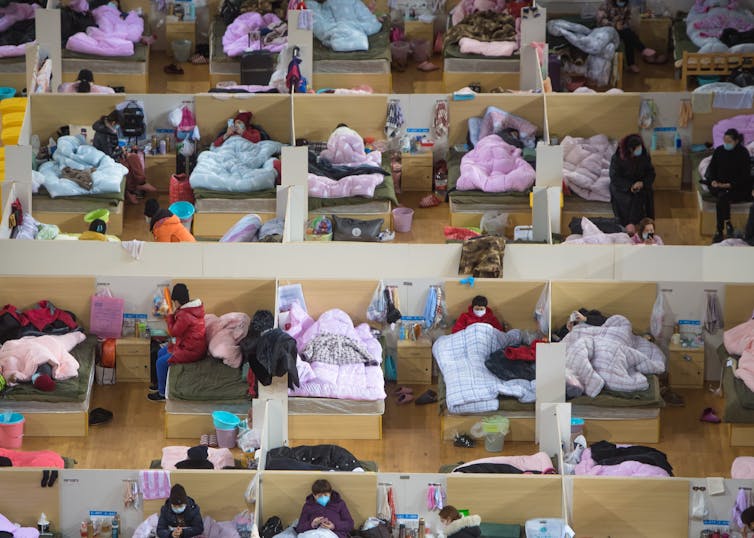
Patients infected with COVID-19 rest at a temporary hospital in Wuhan, China, Feb. 17, 2020. Getty Images/Xiao Yijiu

1. What is a virus?

Defining a virus has been a challenge because every time we come up with a good definition someone discovers a virus that breaks the rules. Viruses are entities that infect cellular life. They are very diverse. The simplest just have a couple of genes made of RNA or DNA wrapped up in a protein coat. Others have hundreds of genes, more than some bacteria.

All viruses are ultimately parasites. They require a host for replication. They cannot generate their own energy like cells can.

2. Why does a virus make people sick?

When a new human virus disease appears, it is most often because the virus has jumped from a different species into humans. The worst viruses are often the ones that have very recently jumped into the species.

After jumping species, the virus goes through a process of adjustment to its new host. The real challenge, however, is to the host. As it tries to figure out how to adjust to an invasion from something completely new, the immune system overreacts. This is what makes the host sick. It usually isn’t an advantage for the virus to make people sick; it is an accident of the hosts’ immune system overreacting to something it doesn’t recognize.

Viruses that have been in a host for a long time are less likely to cause disease. For example, HIV jumped into humans from wild primates, in whose bodies it wasn’t causing any disease.

Every virus-host relationship is different. In most cases, viruses do not cause any disease, and many are beneficial. For example, in mice a herpes virus prevents infection from the plague bacteria.

3. Why is it so important to know the original source?

If the virus comes from an animal, knowing what that animal is can help break the chain of infection. Knowing the source also helps scientists understand mutations that might have occurred in the virus’ genome. That’s because host-jumping affects the variation in a virus genome. When a virus has been in its host for a long time, the genome is fine-tuned to that host, and mutations are not tolerated.
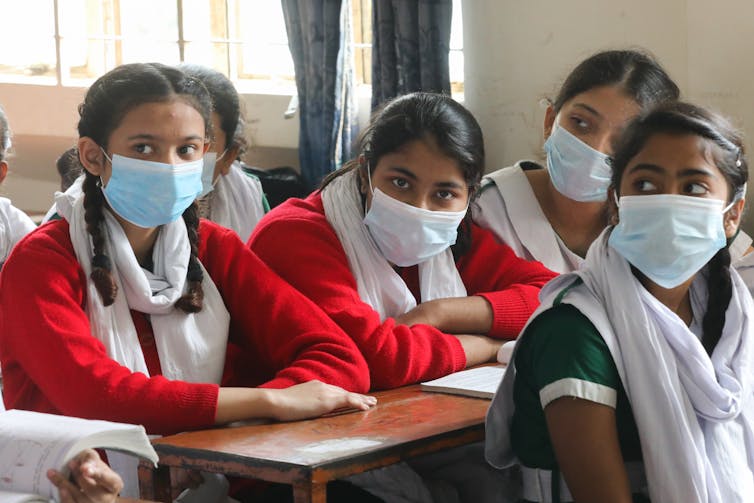
Students in Bangladesh are shown wearing masks Jan. 29, 2020, in an effort to stop the spread of the new coronavirus. Experts are divided on whether wearing masks makes a difference, but most agree that hand-washing is imperative. Getty Images/Mehedi Hasan/NurPhoto

4. SARS was a formidable foe, and then seemed to disappear. Why?

Measures to contain SARS started early, and they were very successful. The key is to stop the chain of transmission by isolating infected individuals. SARS had a short incubation period; people generally showed symptoms in two to seven days. There were no documented cases of anyone being a source of SARS without showing symptoms.

Stopping the chain of transmission is much more difficult when the incubation time is much longer, or when some people don’t get symptoms at all. This may be the case with the virus causing CoVID-19, so stopping it may take more time.

5. What is the best way to treat viruses?

Viruses don’t respond to antibiotics, and in some cases taking antibiotics can make things worse, because the normal bacteria in the gut are an important part of the immune response. Antiviral drugs can work with some viruses, but the mutation rate of most viruses means that they become resistant to antivirals very quickly.

The best treatment is to give the patient the best tools to allow their own body to fight off the infection. This usually means rest and keeping hydrated. Virus infection can suppress the immune system, so patients should be monitored for secondary infections that might require other treatments. Prevention is important. Sick people need to be isolated, and healthy people need to take precautions.

Most respiratory viruses are not transmitted just by breathing them in from sick people, but by getting them on your hands from tiny droplets that sick people distribute by coughing or sneezing, and then touching your face. Good hand-washing is important!

The Conversation

Marilyn J. Roossinck, Professor of Plant Pathology and Environmental Microbiology, Pennsylvania State University

This article is republished from The Conversation under a Creative Commons license. Read the original article.

Total
0
Shares
Share
Tweet
Share
Share
Related Topics
  • Antiviral Drugs
  • Coronavirus
  • COVID-19
  • SARS
  • Virus
dotlah.com

Previous Article
  • Society

What Are Viruses Anyway, And Why Do They Make Us So Sick? 5 Questions Answered

  • February 28, 2020
View Post
Next Article
  • Technology

ST Engineering And Janus Technologies Launch Asia’s First Cloud, Firmware Endpoint Security Solution

  • February 28, 2020
View Post
You May Also Like
Points, Lines and a Question
View Post
  • Engineering
  • Op-Ed
  • People

What Is The Point In Making Points?

  • Dean Marc
  • November 27, 2025
View Post
  • Cities
  • People

We must empower local leaders to meet global goals – here’s why

  • dotlah.com
  • November 4, 2025
View Post
  • People

Singapore’s national identity excludes those who don’t look like a ‘regular family’

  • dotlah.com
  • October 9, 2025
View Post
  • People
  • Politics

Singapore PM Wong arrives in Malacañang

  • dotlah.com
  • June 4, 2025
View Post
  • Featured
  • Features
  • People

Conclave: How A New Pope Is Chosen

  • Dean Marc
  • April 25, 2025
View Post
  • People

PM Wong takes Scoot flight, fellow passengers cheer

  • dotlah.com
  • October 16, 2024
singapore-carbon-market-alliance
View Post
  • Economy
  • Environment

Launch of Singapore Carbon Market Alliance (SCMA) to enable access to and supply of high-quality carbon credits

  • dotlah.com
  • August 1, 2024
dotlah-pm-lee-lawrence-wong-9656d4cd-1fa4-40ed-905d-e19e639b8476_728802dd
View Post
  • Lah!
  • People
  • Politics

End of Lee Era for Singapore as PM Steps Down

  • dotlah.com
  • May 16, 2024


Trending
  • 1
    • Cities
    • Lah!
    • Technology
    3 Reasons Why Singapore Is The Smartest City In The World
    • December 18, 2019
  • 2
    • Lah!
    Trade War: What Is It & How Are We Affected?
    • June 5, 2019
  • 3
    • Science
    GIS, NUS, And Novo Nordisk Team Up To Study Non-alcoholic Fatty Liver Disease In Asian Populations
    • March 12, 2020
  • 4
    • Technology
    National Library Board And Singapore Press Holdings Extend Free Access Of eNewspapers For Library Patrons Beyond Circuit Breaker
    • June 1, 2020
  • factory-worker-5736096_1280 5
    • Business
    • People
    Understanding the Purpose of Reasonable Suspicion Training
    • November 23, 2021
  • 6
    • Cities
    Supply Chain Issues And Autos: When Will The Chip Shortage End?
    • April 18, 2023
  • 7
    • Featured
    Stockholm Guide for the Swifties: Get Ready for It in Swiftholm!
    • May 20, 2024
  • 8
    • Cities
    • Technology
    UOB Gears Up Green Financing With U-Drive, An Integrated Value Chain Solution For The Electric Vehicle Ecosystem
    • September 19, 2021
  • 9
    • Cities
    How To Launch Bids To Participate In The Building Of Smart Cities
    • February 26, 2020
  • 10
    • Cities
    • Lah!
    NTU Is The World’s Best Young University
    • June 25, 2021
  • 11
    • Cities
    SGX Consults On Proposed Rules Changes Related To GIFT Connect
    • June 11, 2021
  • 12
    • Cities
    • World Events
    COVID-19: Which Economies Are Reopening
    • June 8, 2020
Trending
  • Tech Not To Miss 1
    Zed Approves | 12 Cool Tech You’ll Regret Missing
    • December 21, 2025
  • zedreviews-12-gaming-holiday-deals-202512 2
    Zed Approves | 12 Gaming Upgrades You Actually Need This Holiday Season
    • December 17, 2025
  • zedreviews-amazon-uk-50-christmas-deals 3
    Zed Approves | The Amazon 50+ Holiday Gift Deals Worth Buying – UK Edition
    • December 14, 2025
  • Watches 4
    Zed Approves | 12 Watch Gifts for the Holiday Season
    • December 14, 2025
  • 6 Bags You Might Be Missing for Your Next Trip 5
    Zed Approves | 6 Bags You Might Be Missing for Your Next Trip
    • December 2, 2025
  • Zed Approves | 48 Highly Rated Black Friday Deals in 2025 6
    Zed Approves | 48 Highly Rated Black Friday Deals in 2025
    • November 28, 2025
  • Points, Lines and a Question 7
    What Is The Point In Making Points?
    • November 27, 2025
  • 8
    This year’s climate talks saw real progress – just not on fossil fuels
    • November 24, 2025
  • Early Black Friday Deals - Hero image 9
    Zed Approves | More Early Black Friday 2025 Deals You Can’t Miss
    • November 22, 2025
  • 10
    How AI can accelerate the energy transition, rather than compete with it
    • November 19, 2025
Social Links
dotlah! dotlah!
  • Cities
  • Technology
  • Business
  • Politics
  • Society
  • Science
  • About
Connecting Dots Across Asia's Tech and Urban Landscape

Input your search keywords and press Enter.