dotlah! dotlah!
  • Cities
  • Technology
  • Business
  • Politics
  • Society
  • Science
  • About
Social Links
  • zedreviews.com
  • citi.io
  • aster.cloud
  • liwaiwai.com
  • guzz.co.uk
  • atinatin.com
0 Likes
0 Followers
0 Subscribers
dotlah!
  • Cities
  • Technology
  • Business
  • Politics
  • Society
  • Science
  • About
  • People

Not All Face Mask Materials Give You The Same Protection

  • April 12, 2021
face-masks-anton-dX5tNZHRSEI-unsplash
Total
0
Shares
0
0
0

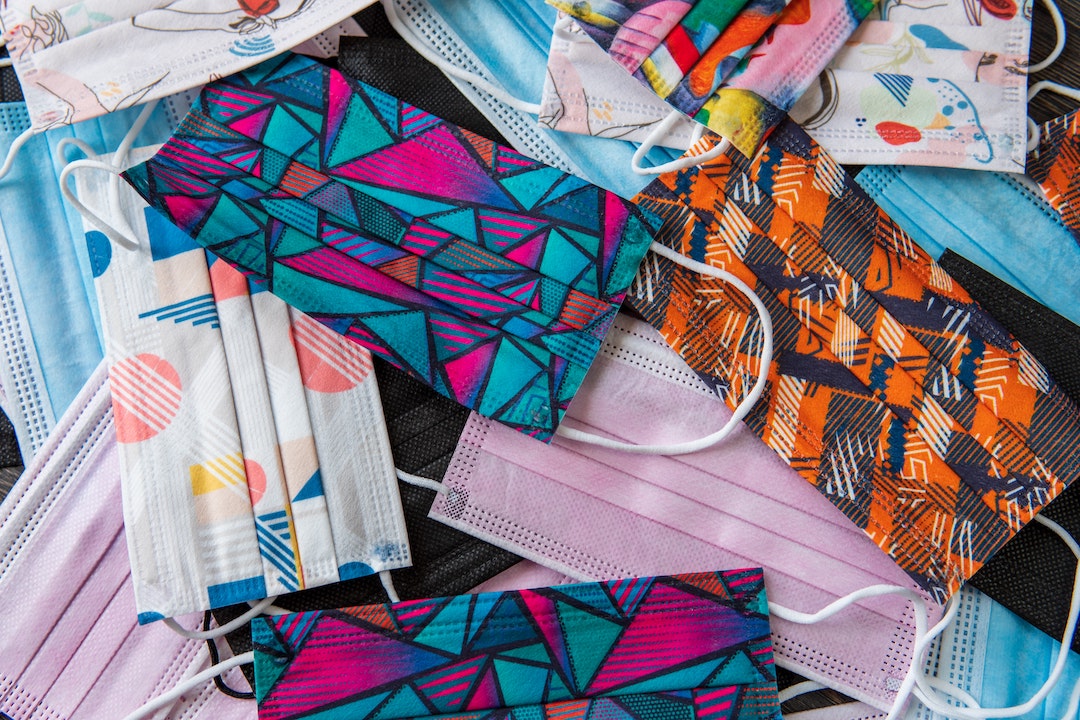
Wearing a face mask can protect you and others from COVID-19, but the type of material and how many fabric layers used can significantly affect exposure risk, according to a new study.

Researchers measured the filtration efficiency of submicron particles passing through a variety of different materials. For comparison, a human hair is about 50 microns in diameter while 1 millimeter is 1,000 microns in size.

“A submicron particle can stay in the air for hours and days, depending on the ventilation, so if you have a room that is not ventilated or poorly ventilated then these small particles can stay there for a very long period of time,” says Nga Lee (Sally) Ng, associate professor in the School of Chemical and Biomolecular Engineering and the School of Earth and Atmospheric Sciences at Georgia Institute of Technology.

Researchers conducted the study during spring 2020, when the pandemic triggered a global shutdown of most institutions. Communities faced massive shortages of personal protective equipment, prompting many people to make their own homemade masks. Researchers quickly set up the study since it already had “a great system for testing filtration efficiency using existing instruments in the lab,” Ng recalls.

Researchers used the findings to shape homemade face mask recommendations last April with findings in the journal Aerosol Science and Technology.

In all, researchers tested 33 different commercially accessible materials not limited to cloth fabrics, including single-layer woven fabrics such as cotton and woven polyester, blended fabrics, nonwoven materials, cellulose-based materials, materials commonly found and used in hospitals, and various filter materials.

“We learned there was a lot of variability in filtration performance even in the same type of material,” Ng says.

“We found commercially available materials that provide acceptable levels of submicron particle rejection while still maintaining air flow resistance similar to a surgical mask,” says Ryan Lively, an associate professor in the School of Chemical and Biomolecular Engineering. “These materials combine fabric fiber density, a maze-like structure, and fiber surface chemistry to effectively reject submicron particles.”

The best-performing materials for homemade masks were blackout drapery and sterilization wrap widely used for packing surgical instruments. Both materials are commercially available.

The researchers say people should avoid using filters such as a HEPA/MERV or vacuum bags unless they are certified to be fiberglass-free since often such filters on their own may release glass fibers that can be inhaled. Other materials to avoid for masks include loose-knitted material, batting fabric, felt, fleece, or shiny, reusable shopping bags.

Multilayered samples performed much better than single-layer samples, but people should pay attention to breathability. The two-layered and three-layered samples tested show an overall filtration efficiency of about 50% for submicron particles. Mask fit is also important since particles can easily escape through gaps at the nose or through the sides of the mask.

The analysis showed that properly fitted and multilayer masks reject 84% of particles expelled by a person when one person wears it. Two people donning these types of masks reduces particle transmission by 96%.

A final takeaway of the research was the importance of universal mask wearing.

“The best way to protect ourselves and others is to reduce exhaled particles at the source, and the source is our face,” Ng says, adding, “That really gets amplified when everyone starts wearing masks.”

She expressed optimism that the findings will motivate people to more widely embrace mask wearing if they are sick and need to be in public.

“Not everyone understands the importance of airborne virus transmission, and the importance of wearing a mask,” she says. “I hope that the practice will continue to help reduce the release of these viral particles into the environment and help protect others.”

Additional coauthors are from Global Center for Medical Innovation, Cobb County (Georgia) Schools, and Georgia Tech. The Center for the Science and Technology of Advanced Material and Interfaces (STAMI) at Georgia Tech supported the work.

Source: Georgia Tech

Original Study DOI: 10.1080/02786826.2021.1905149

Source: Futurity

Total
0
Shares
Share
Tweet
Share
Share
Related Topics
  • COVID-19
  • Fabric
  • Face Masks
  • Viruses
majulah

Previous Article
The Duke of Edinburgh attending the Captain General's Parade as his final individual public engagement, at Buckingham Palace in London.
  • People

Prince Philip Dies: Old-School European Aristocrat And Dedicated Royal Consort

  • April 11, 2021
View Post
Next Article
the-cities-with-the-most-billionaires-3292
  • Cities

Beijing Dethrones New York As The World’s Billionaire Capital

  • April 13, 2021
View Post
You May Also Like
View Post
  • People
  • Working Life

About 23,000 community care sector employees could get at least 7% pay raise as part of new salary guidelines

  • dotlah.com
  • February 18, 2026
View Post
  • People
  • Technology

This is what the new frontier of AI-powered financial inclusion looks like

  • dotlah.com
  • January 2, 2026
View Post
  • People
  • Working Life

Skills development is critical to bridging the global digital talent gap

  • dotlah.com
  • December 22, 2025
Points, Lines and a Question
View Post
  • Engineering
  • Op-Ed
  • People

What Is The Point In Making Points?

  • Dean Marc
  • November 27, 2025
View Post
  • Cities
  • People

We must empower local leaders to meet global goals – here’s why

  • dotlah.com
  • November 4, 2025
View Post
  • People

Singapore’s national identity excludes those who don’t look like a ‘regular family’

  • dotlah.com
  • October 9, 2025
View Post
  • People
  • Politics

Singapore PM Wong arrives in Malacañang

  • dotlah.com
  • June 4, 2025
View Post
  • Featured
  • Features
  • People

Conclave: How A New Pope Is Chosen

  • Dean Marc
  • April 25, 2025


Trending
  • 1
    • Technology
    NTU Scientists Develop Handheld, High-resolution Medical Imaging Device With Potential For Bedside Scanning
    • March 27, 2020
  • 2
    • Cities
    4 European Cities With Low Living Costs But A Great Quality Of Life
    • February 25, 2020
  • 3
    • Technology
    Six In Ten Consumers In Singapore Have Been Targeted By Tech Support Scams In The Last 12 Months: Microsoft Survey
    • September 19, 2021
  • 4
    • Lah!
    NEA Launches Youth For Environmental Sustainability (YES) Programme
    • July 9, 2021
  • 5
    • Cities
    How Trees Could Save The Climate
    • July 12, 2019
  • 6
    • Lah!
    National Day Message 2019
    • August 9, 2019
  • 7
    • Technology
    Boustead Projects Ties Up With Sunseap To Install Rooftop Solar Energy Systems
    • February 25, 2020
  • 8
    • Cities
    • People
    If Countries Were As Large As Their Populations, Here’s How The World Would Look Like
    • January 16, 2020
  • 9
    • People
    • World Events
    How To Cope With The Mental Health Effects Of Social Distancing For COVID-19
    • April 4, 2020
  • tokyo-olympics-ryunosuke-kikuno-PUldfCtEoCk-unsplash 10
    • Cities
    • World Events
    The Massive Costs Behind The Olympic Games
    • July 23, 2021
  • 11
    • Lah!
    KPMG Partners With NParks To Develop A First-Of-Its-Kind Multigenerational Wellness Garden At East Coast Park
    • November 27, 2021
  • 12
    • Technology
    Interdisciplinary Team To Develop Blueprint For Sustainable Urban Food Waste Management And Food Systems Using Black Soldier Flies
    • January 31, 2022
Trending
  • 1
    What will it take to get ships going through the Strait of Hormuz again?
    • April 13, 2026
  • 2
    Hon Hai Technology Group (Foxconn) Recognized As Top 100 Global Innovators 2026
    • April 9, 2026
  • 3
    3 lessons on the energy transition in an age of crisis
    • April 7, 2026
  • 4
    Samsung Unveils Galaxy A57 5G and Galaxy A37 5G, Packing Pro-Level Features at Awesome Price
    • March 25, 2026
  • 5
    The global price tag of war in the Middle East
    • March 24, 2026
  • 6
    Kioxia Announces New SSD Model Optimized for AI GPU-Initiated Workloads
    • March 17, 2026
  • Samsung Odyssey 7
    Samsung Showcases Glasses-Free 3D and HDR10+ GAMING With Acclaimed Game Titles at GDC 2026
    • March 9, 2026
  • 8
    How the Iran war could create a ‘fertiliser shock’ – an often ignored global risk to food prices and farming
    • March 6, 2026
  • 9
    About 23,000 community care sector employees could get at least 7% pay raise as part of new salary guidelines
    • February 18, 2026
  • 10
    U.S. Ski & Snowboard and Google Announce Collaboration to Build an AI-Based Athlete Performance Tool
    • February 8, 2026
Social Links
dotlah! dotlah!
  • Cities
  • Technology
  • Business
  • Politics
  • Society
  • Science
  • About
Connecting Dots Across Asia's Tech and Urban Landscape

Input your search keywords and press Enter.