dotlah! dotlah!
  • Cities
  • Technology
  • Business
  • Politics
  • Society
  • Science
  • About
Social Links
  • zedreviews.com
  • citi.io
  • aster.cloud
  • liwaiwai.com
  • guzz.co.uk
  • atinatin.com
0 Likes
0 Followers
0 Subscribers
dotlah!
  • Cities
  • Technology
  • Business
  • Politics
  • Society
  • Science
  • About
  • Technology

NASA’s Plan To Build A Base Camp On The Moon Sounds Like Sci-Fi, But It’s Real

  • May 25, 2020
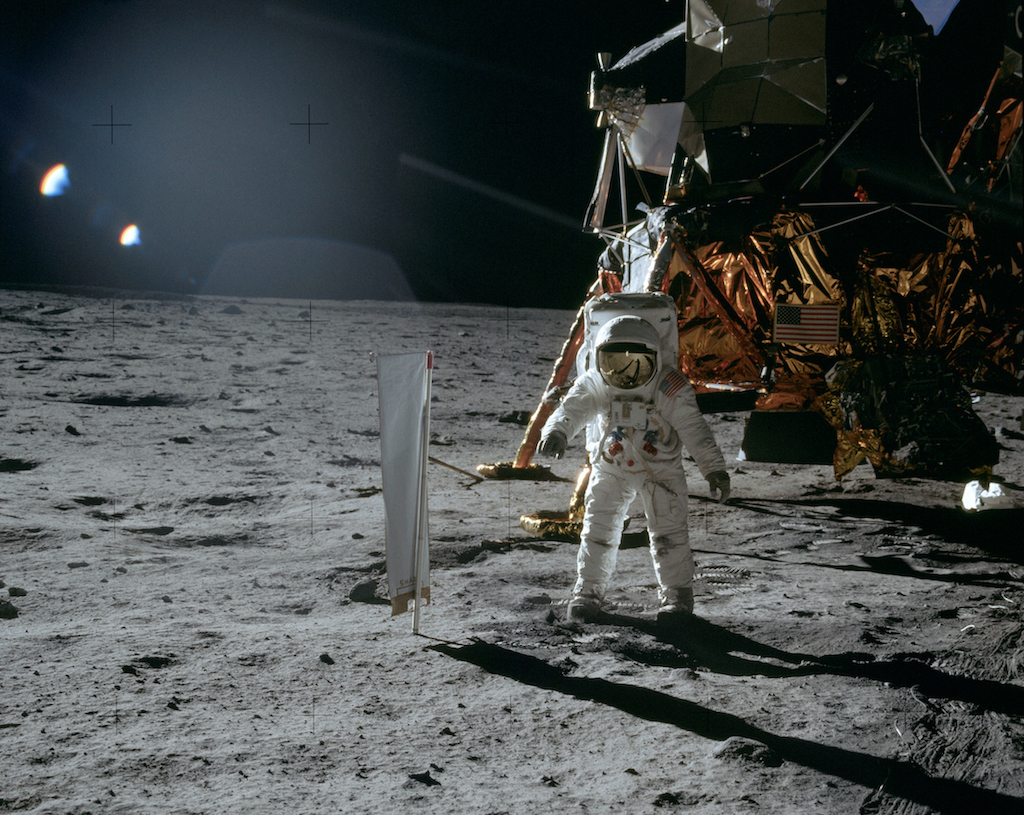
Image Credit: NASA
Total
0
Shares
0
0
0

If we’re ever going to make Elon Musk’s vision of colonizing Mars a reality, we first need to figure out an essential component of the plan: how to get there. After all, it’s somewhere between 34 and 140 million miles away from Earth. The moon is barely spitting distance closer, relatively speaking—but it’s a start. More importantly, it’s the place most similar to Mars that humans are currently able to reach (in that it’s barren, desolate, and not Earth).

That’s just one reason NASA is planning to build a new lunar base camp. In a report released last week, the agency laid out its multi-phase plan for what it’s calling the Artemis program, which will be the core of its spaceflight and exploration endeavors for the next decade. Artemis’s goals cover three domains: low-Earth orbit, the moon, and Mars.

It all starts with robots. In 2021, two robotic missions will deliver scientific and commercial payloads to the moon. In one of the project’s more meta aspects, a robotic mission will also deliver a new robotic lunar rover. It’s called the Volatiles Investigating Polar Exploration Rover (VIPER, thank goodness for acronyms), and it has the word “polar” in it because this is all going to be based at the moon’s south pole, somewhere near the 12-mile-wide by 2-mile-deep Shackleton Crater. VIPER and other lunar rovers will wander around the moon’s surface looking for resources humans will need in order to spend any significant amount of time there, like oxygen and water.

Speaking of putting humans on the moon—which is slated to happen in 2024—here’s how it would work. Four astronauts at a time would fly in an Orion spacecraft to the planned Gateway space station (sort of like the moon’s version of the International Space Station, and SpaceX will be one of various contractors bringing cargo to it). After uncrewed and crewed flight tests—Artemis I and II, respectively, whose flight distances will together total almost a million miles—Artemis III will be the mission that finally lands people on the moon.

Once they’re there, NASA envisions astronauts staying on the moon for up to a week at a time to start. The south pole base camp they’ll dock at will include a lunar terrain vehicle (if you’re picturing a moon version of an ATV, you’re probably not too far off) for them to move around in, and a “habitable mobility platform,” essentially a much larger pressurized vehicle on which astronauts could stay for 45 days at a time.

Once operations on the moon are expanded and astronauts can stay there for longer (will we ever end up with something resembling the 2019 film Ad Astra, where arrivals to the moon are greeted with a strip mall complete with McDonald’s?), the Mars piece of the Artemis plan would kick in.

Just as robots will deliver robots to the moon before humans go there, the same would subsequently happen on Mars: robots first, humans later.

One idea is for a four-person crew to live on the Gateway station for a few months to simulate an outbound trip to Mars, with two of those crew members then traveling to the lunar surface while the other two stay on the Gateway. After the two moon explorers return to the station, all four crew members would hunker down for another multi-month stay there to simulate the return trip to Earth. And you thought being shut in your house for a few weeks was bad…

And here’s one final detail to know about project Artemis. In a (hard-won) nod to gender equality, the program was named after the Greek goddess of the hunt and the moon. In Greek mythology, Artemis was the twin sister of Apollo, for whom the first moon missions were named (and memorialized by Tom Hanks for those of us who weren’t alive at the time). NASA chose the name Artemis as a gesture of inclusion; the agency intends to land the first woman on the moon as part of this multi-faceted project.

You can read all the specifics of project Artemis here.


By Vanessa Bates Ramirez

This article originally appeared on Singularity Hub, a publication of Singularity University.

Total
0
Shares
Share
Tweet
Share
Share
Related Topics
  • Future
  • Moon
  • Space
  • Space Exploration
majulah

Previous Article
  • People

Which U.S. Industries Are Best Geared Towards Remote Working?

  • May 25, 2020
View Post
Next Article
  • Technology

Virtually Supporting Seniors During This Stay-at-home Period

  • May 26, 2020
View Post
You May Also Like
totus-technologies-cover
View Post
  • Business
  • Technology
  • World Events

The Transatlantic Tech Rift and Why Data Sovereignty Is the New Industrial Imperative

  • Ackley Wyndam
  • April 16, 2026
View Post
  • Technology

Hon Hai Technology Group (Foxconn) Recognized As Top 100 Global Innovators 2026

  • Dean Marc
  • April 9, 2026
View Post
  • Artificial Intelligence
  • Technology

Kioxia Announces New SSD Model Optimized for AI GPU-Initiated Workloads

  • Dean Marc
  • March 17, 2026
View Post
  • Artificial Intelligence
  • Technology

U.S. Ski & Snowboard and Google Announce Collaboration to Build an AI-Based Athlete Performance Tool

  • Dean Marc
  • February 8, 2026
View Post
  • Artificial Intelligence
  • Technology

IBM to Support Missile Defense Agency SHIELD Contract

  • Dean Marc
  • February 5, 2026
Smartphone hero image
View Post
  • Gears
  • Technology

Zed Approves | Smartphones for Every Budget Range

  • Ackley Wyndam
  • January 29, 2026
View Post
  • People
  • Technology

This is what the new frontier of AI-powered financial inclusion looks like

  • dotlah.com
  • January 2, 2026
View Post
  • Artificial Intelligence
  • Technology

How AI can accelerate the energy transition, rather than compete with it

  • dotlah.com
  • November 19, 2025


Trending
  • 1
    • Lah!
    3 Dangers Of Rising Temperatures That Could Affect Your Health Now
    • August 22, 2019
  • 2
    • Technology
    How Big Data Can Affect Your Bank Account – And Life
    • September 26, 2019
  • 3
    • Lah!
    Seaweed Farming Could Really Help Fight Climate Change
    • September 18, 2019
  • 4
    • Cities
    New Public Waste Collection Contract For The City-Punggol Sector From 1 July 2021
    • June 11, 2021
  • 5
    • Lah!
    Grab Partners Citi To Enable Seamless Conversion Of Citi ThankYou Points And Citi Miles To GrabRewards Points, Creating Greater Value For Consumers
    • October 21, 2021
  • 6
    • Lah!
    • Society
    • Technology
    Marrying Psychology And Machines
    • September 8, 2021
  • usa-reasons-for-not-buying-an-electric-vehicle-27974 7
    • Cities
    • Environment
    High Prices, Range Anxiety Holding Back EV Adoption
    • August 12, 2022
  • 8
    • Environment
    • People
    What Are Viruses Anyway, And Why Do They Make Us So Sick? 5 Questions Answered
    • February 28, 2020
  • woman-face-mask-flowers-pexels-uriel-mont-6280951 9
    • Features
    • People
    How To Relieve Stress & Anxiety During The COVID-19 Pandemic
    • May 6, 2021
  • dotlah-com_zedreviews-Apple-iPhone-16-Apple-Intelligence-240909 10
    • Featured
    • Features
    • Gears
    • Technology
    Apple introduces iPhone 16 and iPhone 16 Plus
    • September 10, 2024
  • zedreviews-12-gaming-holiday-deals-202512 11
    • Gears
    Zed Approves | 12 Gaming Upgrades You Actually Need This Holiday Season
    • December 17, 2025
  • 12
    • Cities
    The 100 Most Solar Cities In America
    • March 6, 2020
Trending
  • totus-technologies-cover 1
    The Transatlantic Tech Rift and Why Data Sovereignty Is the New Industrial Imperative
    • April 16, 2026
  • 2
    What will it take to get ships going through the Strait of Hormuz again?
    • April 13, 2026
  • 3
    Hon Hai Technology Group (Foxconn) Recognized As Top 100 Global Innovators 2026
    • April 9, 2026
  • 4
    3 lessons on the energy transition in an age of crisis
    • April 7, 2026
  • 5
    Samsung Unveils Galaxy A57 5G and Galaxy A37 5G, Packing Pro-Level Features at Awesome Price
    • March 25, 2026
  • 6
    The global price tag of war in the Middle East
    • March 24, 2026
  • 7
    Kioxia Announces New SSD Model Optimized for AI GPU-Initiated Workloads
    • March 17, 2026
  • Samsung Odyssey 8
    Samsung Showcases Glasses-Free 3D and HDR10+ GAMING With Acclaimed Game Titles at GDC 2026
    • March 9, 2026
  • 9
    How the Iran war could create a ‘fertiliser shock’ – an often ignored global risk to food prices and farming
    • March 6, 2026
  • 10
    About 23,000 community care sector employees could get at least 7% pay raise as part of new salary guidelines
    • February 18, 2026
Social Links
dotlah! dotlah!
  • Cities
  • Technology
  • Business
  • Politics
  • Society
  • Science
  • About
Connecting Dots Across Asia's Tech and Urban Landscape

Input your search keywords and press Enter.