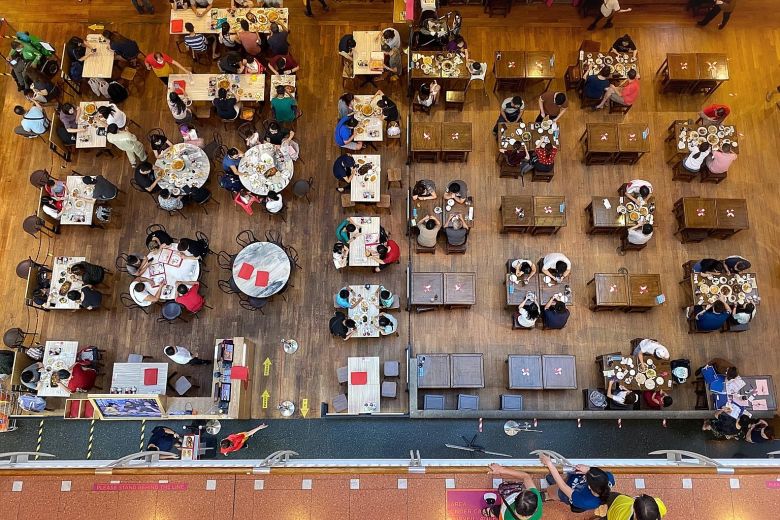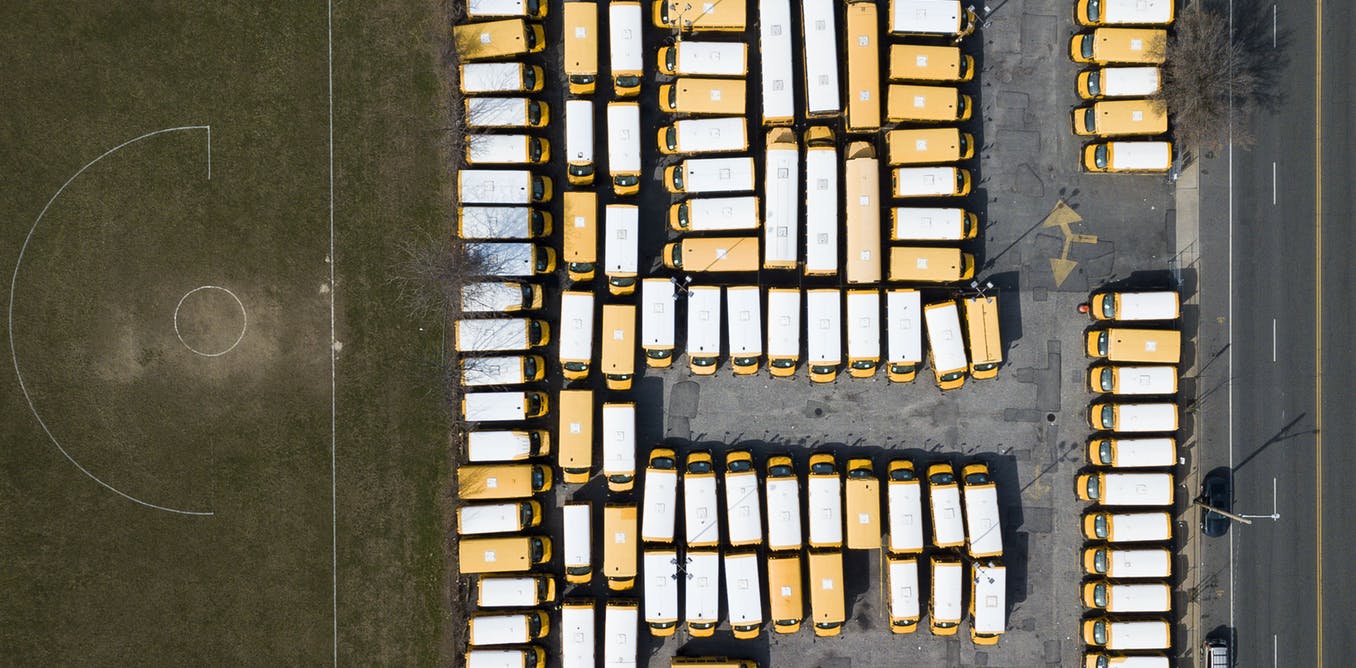
The realisation that life is going to change for a good while is starting to take hold. To flatten the curve of the COVID-19 outbreak, radical measures of social distancing are currently being rolled out in an increasing number of countries. People are being urged – or instructed – to isolate themselves at home. In many countries, schools are closed. The same is true of theatres, bars, and cinemas. Travel for both leisure and business is advised against. Borders are shutting.
Most people presume that all these measures to combat the virus will be temporary, and that at some point — in two, six, or perhaps 12 months — life will be back to normal and business as usual. To some extent, this may be true. But many changes could well be permanent.
Social systems, be it whole economies or individual organisations, are inert and very hard to change. Over time, firms develop into complex and bureaucratic structures, with so many ingrained routines that they are almost impossible to change. Economies too follow a largely path-dependent trajectory. This means that they usually resist radical change, and instead follow a path which more often than not is triggered by a small event or historical accident. Even if the Democratic presidential candidate, Bernie Sanders, and his supporters might like to see it, the US will never become Denmark.
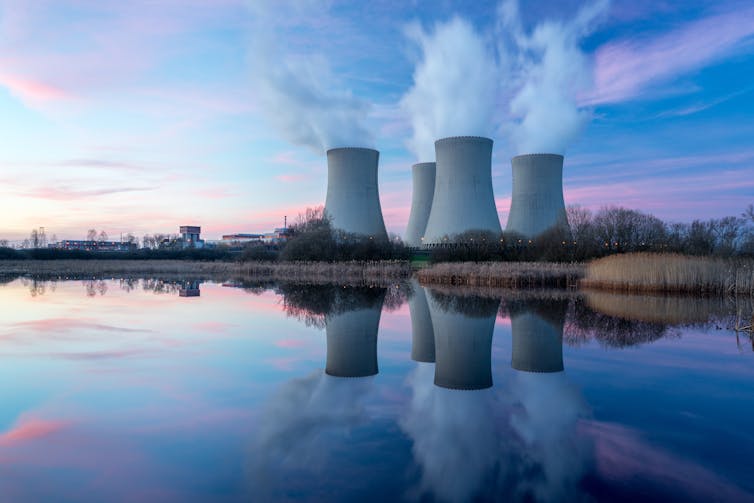
But in times of fundamental crisis, a window of opportunity for change opens up. Sometimes, this window of opportunity is purposefully leveraged to change the course of action. For example, in the wake of the Fukushima disaster in 2011, Chancellor Angela Merkel decided, quite haphazardly, that Germany would discontinue its reliance on nuclear power. In other cases, revolutionary change happens almost by accident, as was the case with the fall of the Berlin Wall.
Research in the social sciences has long made the observation that socio-political change often occurs in sudden bursts: a social system remains stable for a long period of time, until an external shock disrupts it and sets in motion a new trajectory.
Coronavirus may well be such an external shock, fundamentally reshaping some areas of how we life our live. Rather than simply bouncing back and reverting to the pre-coronavirus state, some changes may be permanent. In three areas of our economic lives, changes brought about by coronavirus may well prove much more long-lasting than currently anticipated.
1. Business travel
Business travel is often considered critical for the success of whole organisations and the effectiveness of running them. It is certainly true that face-to-face meetings help build relationships and trust, which is often crucial for making a project succeed. But now that businesses and other organisations are being forced to radically cut down or stop business travel, they may realise that it’s not so essential after all – as long as they find working substitutes.
Now that employees have to rely on Skype or Zoom calls, rather than flying around the globe to meet in person, they may realise that video conferencing is a good alternative: one that is more flexible, family-friendly, and more environmentally sustainable. Employers, meanwhile, will see the possibility for drastic cost-cutting. So in the future, we may see significantly lower levels of business travel.
2. Working remotely
Flexible working arrangements are more and more widespread. But extensive working from home is considered bad for individuals, because they tend to work more hours. It also has downsides for organisations, because it raises coordination costs and critical advantages of being physically present are lost, such as building relationships and a team spirit.
For these reasons, there are signs that the classic physical office space has recently witnessed something of a revival: some pioneers of working remotely have called their workers back to the office.
But now that working remotely is a necessity, both employers and employees will have to build competencies and work out how to do it effectively. Individuals will be forced to build new routines, and organisations will have to find ways to create online spaces for colleagues to interact outside of formal meetings. Good workplace relationships are critical for innovation and the resilience of an organisation. It remains to be seen what might act as the virtual water cooler – a place where colleagues meet, gossip, and innovate.
Coronavirus may force us collectively to become better at working remotely, which could then emerge as a viable alternative to working in downtown offices.
3. Industry disruption
Many industries were already undergoing significant disruption before coronavirus hit. The measures taken to fight coronavirus will accelerate these seismic shifts. Streaming services, for example, threaten the business model of established content creation and distribution, and Amazon is becoming a dominant super-disrupter of a wide variety of industries.
The “stay-at-home-economy” necessitated by coronavirus will dramatically accelerate the shift from the old to the new, making questions of market concentration and the possible need for regulation even more important.
Change will come from both the demand and the supply side. An increasing number of people will start using these services, and start liking them, and becoming loyal customers. And the supply side will also change. Incumbents will be weakened and might even go out of business, and disruptors will continue to invest from a strengthened position.
In other fields the change will be equally dramatic and possibly for good. For example, higher education has been slow in moving into the online teaching space, but now that the sector is forced to deliver modules online, universities are unlikely to totally revert back to the previous status quo. There are huge opportunities offered by online education – in terms of new markets for students and cheaper delivery thanks to economies of scale.
Change happens in bursts, and coronavirus may constitute a critical external shock transforming parts of our lives. While we think of the current changes to our live as temporary, they may well be permanent.
Johann Fortwengel, Senior Lecturer, King’s Business School, King’s College London
This article is republished from The Conversation under a Creative Commons license. Read the original article.